elevenses (i-LEV-uhn-ziz) noun
A midmorning break for refreshments taken between breakfast and lunch,usually around 11am.
And Kate and I thought this was a Tolkien creation!
Want to subscribe to this daily mental boost? Click here
Marguerite Lofft deAngeli is one of the best known and highly regarded author / illustrators in American children's literature. Born in Lapeer, Michigan in 1889, she awarded the Newbery Medal in 1950 for The Door in the Wall, and was among the first to be inducted into the Michigan Women's Hall in of Fame.
This book... attests to deAngeli's versatility. BLACK FOX OF LORNE is historical fiction for older readers and is comparable to DOOR IN THE WALL in richness of historical setting. The story occurred in the tenth century,with two Viking twins shipwrecked on the Scottish coast. They seek to avenge the death of their father and encounter loyal clans men at war, kindly shepherds, power-hungry lairds and staunch crofters. A Newbery Honor Book 1957.
"A selection of William Shakespeare's much-loved sonnets, read by some of the world's finest actors, together with musical settings of passages from his sonnets and plays."
"When the unconventional Durrell family can no longer endure the damp, gray English climate, they do what any sensible family would do: sell their house and relocate to the sunny Greek isle of Corfu. My Family and Other Animals was intended to embrace the natural history of the island but ended up as a delightful account of Durrell’s family’s experiences, from the many eccentric hangers-on to the ceaseless procession of puppies, toads, scorpions, geckoes, ladybugs, glowworms, octopuses, bats, and butterflies into their home.

L'Abri is a French word that means shelter. The first L'Abri community was founded in Switzerland in 1955 by Dr. Francis Schaeffer and his wife, Edith. Dr. Schaeffer was a Christian theologian and philosopher who also authored a number of books on theology, philosophy, general culture and the arts.
The L'Abri communities are study centers in Europe, Asia and America where individuals have the opportunity to seek answers to honest questions about God and the significance of human life. L'Abri believes that Christianity speaks to all aspects of life.
Herriot -- the pen name and alter ego of James Alfred Wight -- wrote 15 books in the time that he could wrest away from his practice. They sold 50 million copies in 20 countries.
But he continued his veterinary practice long after his books made him famous.
"If a farmer calls me with a sick animal, he couldn't care less if I were George Bernard Shaw," he once said.

Morning sun
And morning glories
Pouring down the hill,
Through my window
I can feel the ocean breeze.
Noisy sparrows
Fill the oak trees
Swallows can't stay still
And in the glad commotion
Lord, You speak to me
If rain clouds come
Or the cold winds blow
You're the One
Who goes before me
And in my heart I know
That this good day
It is a gift from YouFernando Ortega: This Good Day
An Old English Prayer
Give us, Lord, a bit of sun
A bit o' work and a bit o' fun
Give us in all the struggle and sputter
Our daily bread and a bit o' butter
Give us health our keep to make
And a bit to spare for other's sake.
Give us, too, a bit of song
And a tale and a book to help us along
Give us, Lord, a chance to be
Our goodly best, brave, wise and free
Our goodly best for ourselves and others
Till all men learn to live as brothers.
I'm fortunate. I don't have to make a living in the world for which I trained. I teach only as often as is fun, and without regard for tenure requirements. What of others who think as I do, but who do teach full time?
They are unsung heroes, on the front lines of a battle against relativism and nihilism. They profess the truth. They insist that aesthetic principles are more than mere personal tastes, often committing professional suicide through an unfashionable attachment to the oft-maligned canon. Or they get relegated to lower-level courses, where they try to teach incoming students to recognize good literature--and this is excruciatingly difficult for the student whose tastes have been formed by one poor fiction after another, and who has been assured all his life that his opinion on anything is as valid as anyone's.
What would you like the reader to take away from the book?
"Although I write military history, above all I am interested in what happened as human experience. And if I were asked to give one good reason to read my book, it would be that we have stupid people who don't know any history saying today that we live in a terrible world: 9/11, Al Qaeda, and so on. It bears saying again and again that we are an incredibly privileged and pampered generation. One need only spend five minutes considering the experiences of what people went through in World War II as a whole - especially in the final cataclysmic phase when more than 100 million people were, as I say in my book, "locked in bloody embrace" - to conclude that we are so very fortunate today.
I would especially hope that the message of humility comes through. The only case for writing books of this kind at all is to teach a new generation soemthing about what happened to a previous generation. Every time I write a book like this, I listen hour after hour to the experiences of hundreds of men and women. And I always come away from listening to them hugely impressed with the dignity and generosity of spirit with which many people have endured far worse things than we will ever have to face."
"Lord, make me see thy glory in every place."
Sonnet XIV
If thou must love me, let it be for nought
Except for love's sake only. Do not say
I love her for her smile--her look--her way
Of speaking gently,--for a trick of thought
That falls in well with mine, and certes brought
A sense of ease on such a day--
For these things in themselves, Belovèd, may
Be changed, or change for thee,--and love, so wrought,
May be unwrought so. Neither love me for
Thine own dear pity's wiping my cheek dry,--
A creature might forget to weep, who bore
Thy comfort long, and lose thy love thereby!
But love me for love's sake, that evermore
Thou may'st love on, through love's eternity.
In the midst of Lent I am made aware that Easter is coming again: the days are becoming longer, the snow is withdrawing, the sun is bringing new warmth, and a bird is singing. Yesterday, during the night prayers, a cat was crying! Indeed, Spring announces itself. And tonight, O Lord, I heard you speak to the Samaritan woman. You said: "Anyone who drinks the water that I shall give will never be thirsty again; the water that I shall give will turn into a spring inside him, welling up to eternal life." What words! They are worth many hours, days, and weeks of reflection. I will carry them with me in my preparation for Easter. The water that you give turns into a spring. Therefore, I do no have to be stingy with your gift, O Lord. I can freely let the water come from my center and let anyone who desires drink from it. Perhaps I will even see this spring in myself when others come to it to quench their thirst.Our Prayer
As a deer yearns
for running streams,
so I yearn
for you, my God.
In you is the source of life,
by your light we see the light.

"'I'm asking everybody for my Sunday School thing, 'Lissa, what they think a friend is. What do you say?'The Wounds of God, by Penelope Wilcock.
'A friend is ... crumbs, let me think. Someone who sticks by you, I think. Someone who won't let you down.'
'That's good; thanks. Make me a cup of coffee, too, will you? Oh, Mother, you haven't said. What do you think a friend is?'
Mother frowned thoughtfully and carried on nipping the little stalks off her gooseberries without replying. She said eventually, 'Well ... I've had friends who've disappointed me. Sometimes, even the ones who loved me have let me down, and not understood, and betrayed my trust. That's only human nature isn't it? I daresay I've done as much to them. No, I would say ... I learned it from a story great-grandmother Melissa told me ... I would say that because we all have our failings and weaknesses, because each of us is only human, a friend - a good friend - is someone who helps you to persevere.'
'What?' said Therese.
'A friend is someone who helps you to persevere. When the going gets tough and you're on the point of jacking it all in; by the time you reach my age, Therese, you will be able to look back at lots of times when you nearly gave up and walked away from a difficult situation; and the people you will remember with thanks and love are the ones who helped you, in those moments, to persevere.'"

By that time the sun was shining; and the front door was open, letting in a warm spring breeze. Bilbo began to whistle loudly and to forget about the night before. In fact he was just sitting down to a nice little second breakfast in the dining-room by the open window, when in walked Gandalf.The Hobbit (Chapter 2), J.R.R. Tolkien
"The Bible tells us that we are God's masterpieces (Greek poiema); not only creatures, but His creations, His poems (Ephesians 2:10). We are living epistles (2 Corinthians 3:3). And so, our lives are meant to be listened to, because it is God who is speaking into and out of and through them, through the parable of each day, the symphony of the years, and the masterpiece of a lifetime."The Poem of Your Life, by Michael Card.
"My mother was a resourceful woman, not easily defeated, but worrying about money was one of the few things that would reduce her to tears. More often, though, when she was anxious, she would be bad tempered, irritable and sharp with us all. It was at the end of a week like that, that Beth's letter about the school outing came.
I got out the loaf of bread and the pot of blackberry jam for tea while Mother read through Beth's letter again.
'It's not bad really,' she said, 'and it's a month off yet. Perhaps she'll be able to have some shoes.'
'I wish we were a bit richer,' I said, getting the margarine and cheese out of the fridge, and bringing knives and plates to the table.
'I don't,' said Mother. 'I know it sounds odd, but I don't. I couldn't bear the thought of people who have no homes and are cold and hungry, if I always had enough. I know I get cross and upset about it, but I would be no better off for covering up my weakness with money. It's good for me to know the places where my soul falls down, and it's good to have to lean on God and ask for his help. I know it's not very nice for you when I'm ratty, but maybe it will help you to understand people better than you would have if you'd been too protected from the realities of life.'"

"Bear began to sigh, and then found he couldn't because he was so tightly stuck; and a tear rolled down his eye, as he said:
'Then would you read a Sustaining Book, such as would help and comfort a Wedged Bear in Great Tightness?'"from: The Complete Tales of Winnie-the-Pooh by A. A. Milne
"But this, you will be nauseated to learn, is a tale of redemption. In about my 13th year, it so happened that a copy of Galahad at Blandings by P. G. Wodehouse entered my squalid universe, and things quickly began to change. From the very first sentence of my very first Wodehouse story, life appeared to grow somehow larger. There had always been height, depth, width and time, and in these prosaic dimensions I had hitherto snarled, cursed, and not washed my hair. But now, suddenly, there was Wodehouse, and the discovery seemed to make me gentler every day. By the middle of the fifth chapter I was able to use a knife and fork, and I like to think that I have made reasonable strides since."
from: A Book of Days for the Literary Year
from: Les Miserables (1987 Original Broadway Cast)
from: the book by Victor Hugo

a non-profit, non-partisan, tax-exempt educational organization whose purpose is to convey to successive generations of college youth a better understanding of the values and institutions that sustain a free and virtuous society.
Founded in 1953, ISI works "to educate for liberty" — to identify the best and the brightest college students and to nurture in these future leaders the American ideal of ordered liberty. To accomplish this goal, ISI seeks to enhance the rising generation's knowledge of our nation's founding principles — limited government, individual liberty, personal responsibility, the rule of law, market economy, and moral norms.
"The history of American higher education amounts to a three-phase story: in the colonial period, colleges promoted belief at a time of established (or quasi-established) religion; in the nineteenth century, they retained something of their distinctive creeds while multiplying under the protection of an increasingly liberal, tolerationist state; in the twentieth century, they became essentially indistinguishable from one another (except in degrees of wealth and prestige), by turning into miniature liberal states themselves—prescribing nothing and allowing virtually everything.[12] Anyone whose parents or grandparents were shut out from educational opportunity because of their race, ethnicity, or gender is thankful for the liberalizing trajectory of higher education— but as in every human story, there is loss as well as gain."


The important thing about rain is
that it is wet.
It falls out of the sky,
and it sounds like rain,
and makes things shiny,
and it does not taste like anything,
and is the color of air.
But the important thing about rain
is that it is wet.
"From the simplest lyric to the most complex novel and densest drama, literature is asking us to pay attention. Pay attention to the frog. Pay attention to the west wind. Pay attention to the boy on the raft, the lady in the tower, the old man on the train. In sum, pay attention to the world and all that dwells therein and thereby learn at last to pay attention to yourself and all that dwells therein.
The painter does the same thing, of course. Rembrandt puts a frame around an old woman's face. It is seamed with wrinkles. The upper lip is sunken in, the skin waxy and pale. It is not a remarkable face. You would not look twice at the old woman if you found her sitting across the aisle from you on a bus. But it is a face so remarkably seen that it forces you to see it remarkably just as Cezanne makes you see a bowl of apples or Andrew Wyeth a muslin curtain blowing in at an open window. It is a face unlike any other face in all the world. All the faces in the world are in this one old face.
Unlike painters, who work with space, musicians work with time, with note following note as second follows second. Listen! says Vivaldi, Brahms, Stravinsky. Listen to this time that I have framed bewtween the first note and the last and to these sounds in time. Listen to the way the silence is broken into uneven lengths between the sounds and to the silences themselves. Listen to the scrape of bow against gut, the rap of stick against drumhead, the rush of breath through reed and wood. The sounds of the earth are like music, the old song goes, and the sounds of music are also like the sounds of the earth, which is of course where music comes from. Listen to the voices outside the window, the rumble of the furnace, the creak of your chair, the water running in the kitchen sink. Learn to listen to the music of your own lengths of time, your own silences.
Literature, painting, music - the most basic lesson that all art teaches us is to stop, look, and listen to life on this planet, including our own lives, as a vastly richer, deeper, more mysterious business than most of the time it ever occurs to us to suspect as we bumble along from day to day on automatic pilot. In a world that for the most part steers clear of the whole idea of holiness, art is one of the few places left where we can speak to each other of holy things.
And when Jesus comes along saying that the greatest command of all is to love God and to love our neighbor, he too is asking us to pay attention. If we are to love God. we must first stop, look, and listen for him in what is happening around us and inside us. If we are to love our neighbors, before doing anything else we must see our neighbors. With our imagination as well as our eyes, that is to say like artists, we must see not just their faces but the life behind and within their faces. Here it is love that is the frame we see them in."
"I laughed about your Red Wheelbarrow. I don't "get" WCW either--but someone told me that he wrote that particular poem when he went to see a very sick little girl (he was a doctor) and, standing beside her sickbed, looked out the bedroom window and saw that scene. It's the mundane moments that make up our lives, and that, if we pay attention to them, help us see how precious life is; but we so often only notice them if we're threatened with loss. WHICH as we all know isn't supposed to be the way you read a poem, having to know its context, but all the same I liked the poem far better for knowing it."
"...didn't you ever look at something homely and ordinary, something that until then you'd always managed to overlook, and suddenly you recognized its beauty, and even had the feeling that this simple thing was not only beautiful but important? I mean, that's the essense of the art of someone like Andrew Wyeth, after all. It might almost seem, at that moment of recognition, that everything depends on this homely thing. Sure, that's an exaggeration. Poet's exaggerate. The world will go on whether we stop to notice or not. Whether, in fact, the object of our perception had ever existed or not. And yet, yes, there is something important going on when we simply look. When we simply perceive! I'm quite convinced that much does indeed depend on this. So give William Carlos another opportunity to tell you once more about the red wheel barrow and the chickens in the rain."
"Every day is somebody's birthday," said Pooh.
"That's a lot of cake!" said Piglet.


"Tavern patrons got used to seeing Rudy's books piled every which way, under the 50-cent bags of chips or on top of the bar, or over by the collection of beer steins painted with Clydesdale horses. Elsie reads too. She loves historical novels. But in 49 1/2 years of marriage, she never could catch up with Rudy."
"He always said you were never locked in one place when you read books. You could be under the ocean or exploring space or shooting cowboys and Indians in the desert."
"There's a proper library an hour's drive away, in O'Neill, with 28,500 volumes, a computerized card catalog and dozens of magazines laid out alphabetically... That's the place to go if you need a book. Rudy's Library is where to go if you love them."
"Two epidemic illnesses of our time - upon both of which virtual industries of cures have been founded - are the disintegration of communities and the disintegration of persons. That these two are related (that private loneliness, for instance, will necessarily accompany public confusion) is clear enough. And I take for granted that most people have explored in themselves and their surroundings some of the intricacies of the practical causes and effects; most of us, for example, have understood that the results are usually bad when people act in social or moral isolation, and also when, because of such isolation, they fail to act.
What seems not so well understood, because not so much examined, is the relation between these disintegrations and the disintegration of language. My impression is that we have seen, for perhaps a hundred and fifty years, a gradual increase in language that is either meaningless or destructive of meaning. And I believe that this increasing unreliability of language parallels the increasing disintegration, over the same period, of persons and communities."

In the ancient city of Rome there lived a humble and gentle man. His clothes were not as fine as the noblemen's, and his leather sandals were worn thin. He did not live in a grand house made of smooth marble,but in a small dwelling in a crowded part of the city. The man's friends and neighbors called him Valentine.




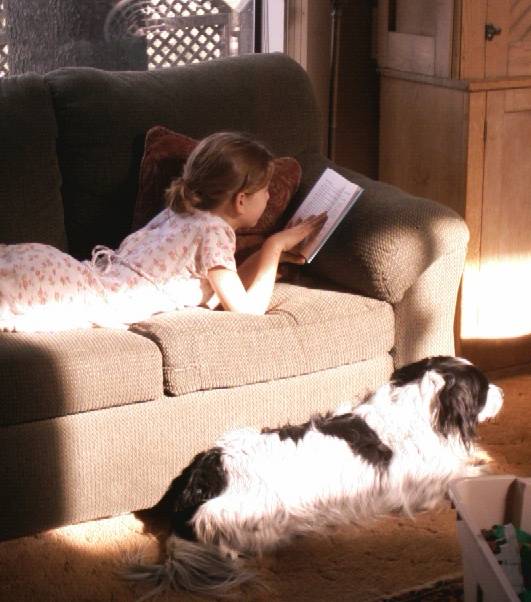
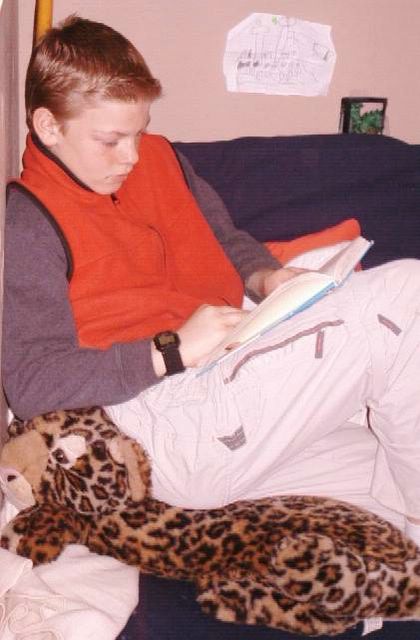
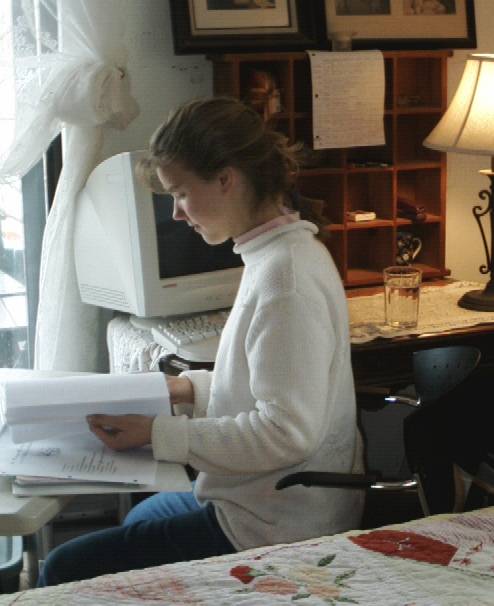
It was the best of times, it was the worst of times....
"Just as our eyes need light in order to see, our minds need ideas in order to create." Nicholas Malebranche
Another contemporary contradiction is that more books are being published today than ever before but educated people are reading less. Over a decade ago I was sent a questionnaire from college; the questionnaire, when collated, would give some idea of what we had done and become since graduation. One of the questions was, "How many books have you read in the past year?"
Most of the girls with whom I went to college were moderately privileged intellectually. Smith has never been an easy college to get into. I felt very ashamed when I answered that particular question, "Two or three books a week."
When the questionnaire was collated there was horror at the answer to that particular question: a high percentage had read no books at all.
All right: our children were little; this is not an age of many servants; most of us had a good deal to struggle with. But no books? I read while I'm stirring the white sauce, while I'm in the subway, in the bath.
A grammar snob at school
... on whether it's snobby to demand correct grammar in school. A Fairbanks, Alaska elementary teacher saw that the "Parents Lounge" sign was missing its apostrophe.
"So, I whipped out my handy marker and was inserting an apostrophe when my principal came along. She told me we must not be grammar snobs. Right, at an educational institution, it's never good form to actually try to educate."
The teacher saw the sign as an imperative, ordering parents to lounge, while I think it was a general comment about parents' tendency to lounge.
"And yet there are some things I would be willing to bet maybe even my life on.
That life is grace, for instance - the givenness of it, the fathomlessness of it, the endless possibilities of its becoming transparent to something extraordinary beyond itself. That - as I picked up somewhere in Jung and whittled into the ash stick I use for tramping around through the woods sometimes - vocatus atque non vocatus Deus aderit , which I take to mean that in the long run, whether you call on him or don't call on him, God will be present with you. That if we really had our eyes open, we would see that all moments are key moments. That he who does not love remains in death. That Jesus is the Word made flesh who dwells among us full of grace and truth. On good days I might add a few more to the list."
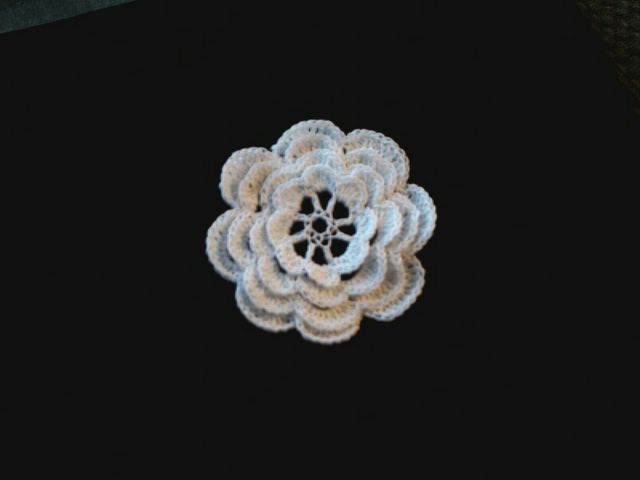

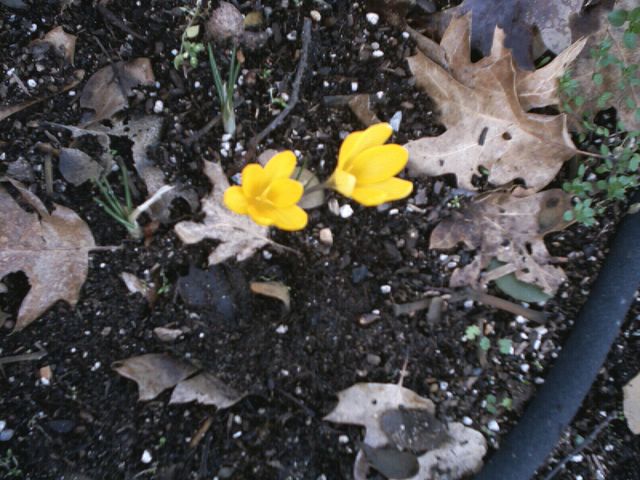
"The mark of solitude is silence, as speech is the mark of community. Silence and speech have the same inner correspondence and difference as do solitude and community. One does not exist without the other. Right speech comes out of silence, and right silence comes out of speech."
Dietrich Bonhoeffer--along with his twin sister, Sabine--was born on February 4, 1906, in Breslau, Germany. Later a student in Tubingen, Berlin, and at Union Theological Seminary in New York -- as well as a participant in the European ecumenical movement-- Bonhoeffer became known as one of the few figures of the 1930s with a comprehensive grasp of both German- and English-language theology. His works resonate with a prescience, subtlety, and maturity that continually belies the youth of their author.
Bonhoeffer's theologically rooted opposition to National Socialism first made him a leader, along with Martin Niemueller and Karl Barth, in the Confessing Church (bekennende Kirche), and an advocate on behalf of the Jews. Indeed, his efforts to help a group of Jews escape to Switzerland were what first led to his arrest and imprisonment in the spring 1943. His leadership in the anti-Nazi Confessing Church and his participation in the Abwehr resistance circle (beginning in February 1938) make his works a unique source for understanding the interaction of religion, politics, and culture among those few Christians who actively opposed National Socialism, as is particularly evident in his drafts for a posthumously published Ethics. His thought provides not only an example of intellectual preparation for the reconstruction of German society after the war but also a rare insight into the vanishing social and academic world that had preceded it.
Bonhoeffer was also a spiritual writer, a musician, and an author of fiction and poetry. The integrity of his Christian faith and life, and the international appeal of his writings, have led to a broad consensus that he is the one theologian of his time to lead future generations of Christians into the new millenium.
He was hanged in the concentration camp at Flossenbürg on April 9, 1945, one of four members of his immediate family to die at the hands of the Nazi regime for their participation in the small Protestant resistance movement.
 Life Together: The Classic Exploration of Faith in Community
 Letters & Papers from Prison
 The Cost of Discipleship
 Bonhoeffer: The Cost of Freedom (Focus on the Family Radio Theatre)
It often seems hard to have to spend the beautiful long summer days here for the second time; but one just can't choose where one has to be. So we must keep on trying to find our way through the petty thoughts that irritate us, to the great thoughts that strengthen us - I'm at present reading the quite outstanding book by W. F. Otto, the classics man at Konigsberg, The Gods of Greece. To quote from his closing words, it's about 'this world of faith, which sprang from the wealth and depth of human existence, not from its cares and longings'. Can you understand my finding something very attractive in this theme and its treatment, and also - horribile dictu - my finding these gods, when they are so treated, less offensive than certain brands of Christianity? The book is most helpful for my present theological reflections.

There is a joy in the journey
There's a light we can love on the way
There is a wonder and wildness to life
And freedom for those who obey
"Henry David Thoreau once wrote: 'If a man does not keep pace with his companions, perhaps it is because he hears a different drummer. Let him step to the music he hears, however measured or far away.'
Something about being in rhythm with the music makes us feel good and whole and connected to something larger than us. Maybe that is something of what I felt as a young boy trying to keep pace with my father's steps.
Everything we do, we do rhythmically, which is to say, musically. When we walk, there is a cadence to our steps. When we dance, there is a music to our movements. When we throw a baseball, we do it with a rhythm of winding up, throwing, and following through. Whether it's a baseball player pitching or a ballerina dancing or a custodian sweeping, if they do what they do well, they do it in sync with a certain rhythm.
When they don't, the level of discord increases, and with it, their chances of failure. The ballerina may gracefully leap into the air, but if her timing is off on the way down, she may fall flat on her face. The same is true of the farmer who is in sync with the planting season but maybe out of sync with the harvest. If he is late in getting to the fields, the crop may be ruined. If we want to live in harmony with the universe as God has ordered it, we must live our lives in response to those rhythms.
But there are other rhythms at work in the universe.
From the heart of God comes the strongest rhythm - the rhythm of love. Without His love reverberating in us, whatever we do will come across like a noisy gong or a clanging symbol. And so the work of the human heart, it seems to me, is to listen for that music and pick up on its rhythms."

COVID:2 Collage Four years ago today we all came home for the lock down. Middle school classes conducted by zoom on the deck, college cours...


