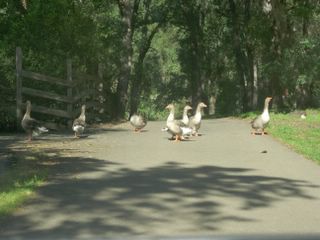
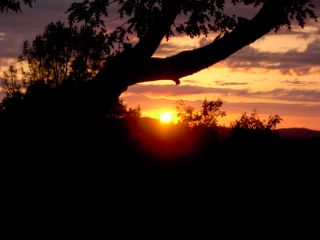
My own Pangur Ban ... Horatio
"Science and the Trinity...expands on the scientist-theologian's 2003 Warfield Lectures at Princeton Theological Seminary. The title and subtitle convey the distinctives of Polkinghorne's approach. On the one hand, as the title suggests, this is not really a treatise on"science and religion," with religion left so ill-defined that the book will frustrate practitioners of any actual faith. Polkinghorne is convinced that Trinitarian theology, anchored in the "scandalous particularity of the incarnation," is a better vantage point for engaging science than religion in the abstract. On the other hand, as the subtitle suggests, twenty years of work as a theoretical physicist have led Polkinghorne to the conviction that science delivers truth about reality, and he is determined not to evade the implications that reality may have for the theory and practice of Christian faith. His account of science and Christian theology succeeds unusually well in doing justice to both sides of the conversation."
"If literature is a metaphor for the writer's experience, a mirror in which that experience is at least partially reflected, it is at the same time a mirror in which the reader can also see his or her experience reflected in a new and potentially transforming way. This is what it is like to search for God in a world where cruelty and pain hide God, Dostoevski says - "How like a winter hath my absence been from thee"; how like seeing a poor woman in a dream with a starving child at her breast; how like Father Zossima kneeling down at the feet of Dmitri Karamazov because he sees that great suffering is in store for him and because he knows, as John Donne did, that suffering is holy. And you and I, his readers, come away from our reading with no more proof of the existence or nonexistence of God than we had before, with no particular moral or message to frame on the wall, but empowered by a new sense of the depths of love and pity and hope that is transmitted to us through Dostoevski's powerful words.
Words written fifty years ago, a hundred years ago, a thousand years ago, can have as much of this power today as ever they had it then to come alive for us and in us and to make us more alive within ourselves. That, I suppose, is the final mystery as well as the final power of words: that not even across great distances of time and space do they ever lose their capacity for becoming incarnate."
"The story of science and religion since the Middle Ages has been one of estrangement rather than conflict. When the Aristotelian synthesis shattered, science and theology drifted apart, becoming at last disconnected universes of discourse.
Over the last few decades many theologians and some scientists have attempted a new “dialogue of science and religion” in order to end this estrangement. A leading figure in this dialogue has been John Polkinghorne, a respected theoretical particle physicist at Cambridge University who, in the early 1980s, left scientific research in mid-career to become an Anglican clergyman and devote himself to writing on science and theology.
The science-theology dialogue has chiefly dealt with natural theology and such basic issues as the existence of God, the order and intelligibility of the universe, the evidence for design and purpose in nature, and the limitations of a crassly reductionist materialism. It has brought greater understanding and even some agreement among people of diverse backgrounds and concerns, ranging from agnostic seekers to people of traditional faith."
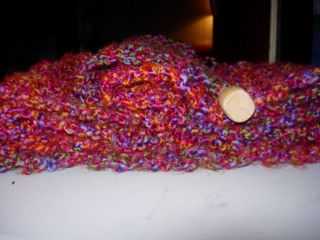

Meet me here for breakfast
At the café on the deck
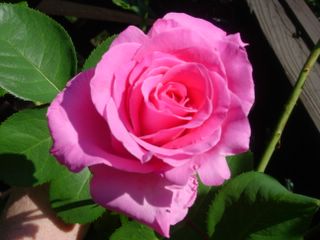
For the roses are in bloom
And the children are with the Jack’s
You’ve always been my favorite
Of people to share my time
To sit in our jammies, dark roast in hand,
The hours will soar and fly
Oh, the remembrance of another deck
With the ocean as its view
The Chronicle on a Sunday morning
And our marriage just brand new
But this café with the roses,
With a view of trees and birds,
Has the quiet of a foothill morn
And our marriage of nineteen years
This is my favorite spot
With its scenery so rare
There’s nowhere for better coffee
No company more fair
I’d gladly do the work again,
And learn the lessons twice,
To share this morning with you here
As your best friend and your wife.
If intimacy means being open and honest and authentic, so I don't have veils, or I don't have to be defensive or in denial of who I am, that's wonderful. But in our culture, intimacy usually has sexual connotations, with some kind of completion. So I want intimacy because I want more out of life. Very seldom does it have the sense of sacrifice or giving or being vulnerable. Those are two different ways of being intimate. And in our American vocabulary intimacy usually has to do with getting something from the other. That just screws the whole thing up.
It's very dangerous to use the language of the culture to interpret the gospel. Our vocabulary has to be chastened and tested by revelation, by the Scriptures. We've got a pretty good vocabulary and syntax, and we'd better start paying attention to it because the way we grab words here and there to appeal to unbelievers is not very good.
"The growing child-nature gap has profound implications for the future, including the mental, physical and spiritual health of generations to come--and for the earth itself... Ironically, at the very moment when more children than ever before are unplugged from nature, science is finally demonstrating just how important direct contact with the outdoors is to healthy human development."
"It had been difficult for him (Nouwen) at first, he said. Physical touch, affection, and the messiness of caring for an uncoordinated person did not come easily. But he had learned to love Adam, truly to love him. In the process he had learned what it must be like for God to love us-spiritually uncoordinated, retarded, able to respond with what must seem to God like inarticulate grunts and groans."
"It has always been a peculiarity that human beings seem discontent with what works and feel compelled to change, or 'improve,' what for centuries produced desired results."
"The art of drawing is an act of uncanny coordination between the hand, the eye, and the mind. Each of these is subject to training and habit. For many students, improvement in drawing simply lies in breaking bad habits and replacing them with new and useful ones. For example, what do you think of as you draw? Can you remember? Perhaps your mind wanders. Perhaps you think of nothing at all. If you are like most of us though, you do, from time to time, carry on an internal dialogue as you work. This dialogue will either help or hinder your ability to draw, depending on which of two basic types it is."
"Any view or theory of origins must be held in spite of unsolved problems; proponents of both design and unplanned descent acknowledge this. Such uncertainties are part of the healthy dynamic that drives science. However, without exaggeration, there is impressive and consistent evidence, from each area we have studied, for the view that living things are the product of intelligent design."






Good Company
Today I have grown taller from walking with the trees,
The seven sister-poplars who go softly in a line;
And I think my heart is whiter for its parley with a star
That trembled out at nightfall and hung above the pine.
The call-note of a redbird from the cedars in the dusk
Woke his happy note within me to answer free and fine;
And a sudden angel beckoned from a column of blue smoke--
Lord, who am I that they should stoop--these holy folk of thine?
--Karle Wilson Baker (1878-1960)

The joy of the Lord will be my strength;
I will not falter, I will not faint
He is my Shepherd, I am not afraid
The joy of the Lord is my strength.Twila Paris


"You can be bored by virtually anything if you put your mind to it, or choose not to. You can yawn your way through Don Giovanni or a trip to the Grand Canyon or an afternoon with your dearest friend or a sunset. There are doubtless those who nodded off at the coronation of Napoleon or the trial of Joan of Arc or when Shakespeare appeared at the Globe in Hamlet or Lincoln delivered himself of a few remarks at Gettysburg. The odds are that the Sermon on the Mount had more than a few of the congregation twitchy and glassy-eyed.
To be bored is to turn down cold whatever life happens to be offering you at the moment. It is to cast a jaundiced eye at life in general including most of all your own life. You feel nothing is worth getting excited about because you are yourself not worth getting excited about.
To be bored is a way of making the least of things you often have a sneaking suspicion you need the most."


"You say grace before meals. All right.
But I say grace before the play and the opera,
And grace before the concert and the pantomime,
And grace before I open a book,
And grace before sketching, painting,
swimming, fencing, boxing, walking, playing, dancing;
And grace before I dip the pen in the ink."

This light brown or fawn colored moth has a wing spread of 3.5 to 5.5 inches. Except for the eye-spots, it is less distinctly patterned than either the cecropia or promethea. There is a relatively small window-like spot near the middle of each wing, but the window of the hindwing is surrounded by a dark patch which makes it appear larger.
The polyphemus caterpillar prefers oak, hickory, elm, maple and birch but apple, beech, ash, willow, linden, rose, grape and pine are also satisfactory host plants. The caterpillar's color is light green with narrow white bars on the sides.
They are stocky and slightly thicker in the middle. Caterpillars reach their full grown length of a little less than four inches by August or September. At this time it spins an oval tough cocoon usually with a leaf of the host plant securely webbed to its surface.
The caterpillar changes to a pupa in the completed cocoon and spends the winter in this stage. The moths emerge from their cocoons and lay eggs the following June.

"Chronicled here are the origins of jazz in turn-of-the-century southern black communities. Also covered are jazz's transition to Broadway in the hands of George Gershwin; jazz at Carnegie Hall in the persons of Benny Goodman, Lionel Hampton, Teddy Wilson, and Gene Krupa; pioneers of bebop, including Charlie Parker and Dizzy Gillespie; and the great jazz vocalists, including Ella Fitzgerald, Dinah Washington, and Sarah Vaughan. This volume takes jazz to the present day, showing the synthesis of jazz and electronic music and citing today's best instrumentalists, including Wyton Marsalis and Don Byron."


Be still, sad heart, and cease repining; Behind the clouds the sun is shining; Thy fate is the common fate of all, Into each life some rain must fall, Some days must be dark and dreary.Henry Wadsworth Longfellow, An April Day
Today, east of Sacramento, two grown women (the mothers of ten children between the two of them) were seen surreptitiously entering a movie theater in the mid-afternoon. Several hours later, they were seen leaving the movie Kingdom of Heaven and were questioned at the door. "Excuse me, ladies. Is it true you came all this way to see Orlando Bloom?" The older of the two women muttered a comment about being old enough to be the man's mother, and that the few seconds of a preview with Russell Crowe were more her cuppa tea. Defending their presence there at such a frivolous hour, she declared, "As home educating parents, amidst the study of this time period, a film about the Crusades was a worthwhile use of our time. Plus, they had free popcorn and soda for the grand opening. You can't ask a frugal mother to pass that up, can you?" The other woman, much younger, blushed and said, "No comment."
"Religion is the key to history, Lord Acton wrote. In today’s intellectual circles, however, it’s more like the skunk at the garden party. To many intellectuals, religion is a private matter at best, and most appropriately considered in terms of its functions rather than the significance of its beliefs, let alone its truth claims. At worst, it’s the main source of the world’s conflicts and violence—what Gore Vidal, in his Lowell Lecture at Harvard University in 1992, called “the great unmentionable evil” at the heart of our culture."

"Schola Classical Tutorials offers live group tutorials over the internet in the subjects of a classical liberal arts curriculum: the classical languages, the great books of literature and history, and rhetoric. These are the subjects that teach students the skills of thinking and learning and that teach them the history of the ideas that have shaped our culture. These skills, and a knowledge of these ideas, are the foundation for further study and for a lifetime of learning and intelligent participation in our culture."

"When a minister reads out of the Bible, I am sure that at least nine times out of ten the people who happen to be listening at all hear not what is really being read but only what they expect to hear read. And I think that what most people expect to hear read from the Bible is an edifying story, an uplifting thought, a moral lesson - something elevating, obvious, and boring. So that is exactly what very often they do hear. Only that is too bad because if you really listen - and maybe you have to forget that it is the Bible being read and a minister who is reading it - there is no telling what you might hear."


COVID:2 Collage Four years ago today we all came home for the lock down. Middle school classes conducted by zoom on the deck, college cours...